FAQ – frequently asked
Explore the most common questions about energy efficiency, comfort, integration, installation, and building performance — all in one place. Whether used independently or together, hywin systems help buildings consume less energy, reduce complexity, and create better spaces for occupants.
What exactly does hywin do?
hywin is a building performance system that connects facade performance, room automation, and building-wide optimization. climatechfacade manages heating, cooling, and solar shading directly in the facade. adaptIQ connects multisensor data, automation logic, user preferences, and BMS integration. Both systems can work independently or together. The result is lower energy demand, better comfort, fewer technical interfaces, and scalable building optimization from the facade to the room.
How does hywin create financial return?
hywin creates ROI by reducing energy demand, simplifying technical systems, lowering coordination risk, improving comfort, and supporting long-term asset value. climatechfacade can reduce heating and cooling loads at the facade. adaptIQ improves operation by controlling rooms based on actual conditions instead of static schedules. The financial return depends on building type, facade ratio, HVAC concept, energy prices, usage profile, and whether the project is new build or retrofit.
How does hywin reduce building operating costs?
hywin reduces operating costs by combining facade performance, building automation, and real-time control into one integrated system.
ClimaTechFacade (CTF) reduces heating and cooling demand directly at the building envelope. By integrating heating, cooling, and solar shading into the facade, thermal loads are managed before they enter the building. This reduces peak loads, lowers HVAC requirements, decreases energy consumption, and improves occupant comfort. Integrated shading is protected from wind and weather, reducing maintenance and ensuring reliable operation.
adaptIQ continuously monitors occupancy, temperature, air quality, daylight, and other room conditions through intelligent multisensors. The platform automatically adjusts building operation based on real-time demand rather than fixed schedules, reducing energy waste and unnecessary heating, cooling, lighting, and ventilation.
Together, ClimaTechFacade and adaptIQ create a scalable building performance system that helps owners reduce energy costs, simplify operations, support decarbonization goals, and maintain comfortable indoor environments in both new construction and existing buildings.
Does hywin increase asset value?
hywin helps increase long-term asset value by improving energy efficiency, occupant comfort, operational flexibility, and ESG performance.
ClimaTechFacade (CTF) reduces heating and cooling demand at the facade, where most thermal gains and losses occur. By integrating heating, cooling, and shading into a single system, it helps lower energy consumption, improve perimeter comfort, and support decarbonization goals. The modular design also adapts easily to changing layouts and building uses without major reconstruction.
adaptIQ adds real-time building intelligence through multisensors, automation, and data-driven control. It continuously optimizes indoor climate, energy use, and building operation while integrating with existing building management systems (BMS).
Buildings that consume less energy, provide better occupant comfort, support ESG requirements, and can be adapted to future tenant needs are typically more attractive to investors, occupiers, and long-term owners. This can help improve leasing potential, reduce operating costs, and strengthen long-term asset performance.
How does hywin reduce project risk?
hywin reduces project risk by reducing interfaces between facade, HVAC, shading, sensors, and controls. climatechfacade integrates heating, cooling, and solar shading into one facade-based system. adaptIQ connects room data and automation into a scalable control layer. Fewer disconnected systems mean fewer handovers, less ambiguity, and lower risk of coordination errors during planning, installation, commissioning, and operation.
How should procurement evaluate hywin?
Procurement should evaluate hywin by lifecycle value. climatechfacade combines facade, heating, cooling, and shading functions. adaptIQ combines sensing, automation, user control, and BMS integration. A fair comparison should include energy use, HVAC sizing, installation effort, coordination risk, maintenance, commissioning, operating cost, comfort quality, and future scalability.
How does hywin improve thermal comfort in buildings?
hywin improves thermal comfort by optimizing conditions at the facade and automating room control. climatechfacade reduces cold downdrafts, overheating, and unstable perimeter zones by heating, cooling, and shading at the glass surface. adaptIQ measures room conditions and adjusts climate, shading, lighting, and ventilation based on real use. The result is more stable comfort with less manual intervention.
Can hywin connect to our existing building management system?
hywin supports BMS integration through standard communication approaches such as Modbus, Bluetooth Low Energy, MQTT and others depending on the project architecture. climatechfacade can connect to BMS, while adaptIQ can operate as a platform layer for room automation, monitoring, and third-party integration. Interface design should be confirmed during technical planning.
Can hywin be used in building retrofits?
Yes. hywin can be used in retrofit and refurbishment projects. climatechfacade can be integrated into facade renovation concepts, including project-specific facade variants. One particular advantage is that the heating and cooling systems can be retrofitted via the facade, regardless of any constraints within the building. adaptIQ can be added to existing rooms, systems, and BMS environments to improve automation without rebuilding the entire building. Retrofit design depends on facade condition, technical routes, hydraulic concept, electrical access, and control integration.
Is climatechfacade suitable for new buildings?
Yes. climatechfacade is suitable for new construction because heating, cooling, and shading can be planned directly into the facade system from the start. Early integration helps optimize HVAC sizing, facade design, technical routes, controls, and installation responsibilities. adaptIQ can then provide room automation and building-wide optimization from day one.
When should hywin be planned into a building project?
Preferably, hywin should be involved as early as concept design or schematic design, especially when climatechfacade may influence facade geometry, HVAC sizing, hydronic routes, electrical planning, and BMS integration. adaptIQ can be planned later than the facade, but early integration improves room automation, data strategy, and commissioning outcomes.
What is included in a hywin feasibility check?
A hywin feasibility check should assess building type, facade concept, thermal loads, retrofit or new-build constraints, HVAC strategy, hydronic connections, electrical supply, BMS integration, room zoning, maintenance access, and expected business impact. The goal is to determine whether climatechfacade, adaptIQ, or the combined hywin system creates measurable value for the project.
Can climatechfacade and adaptIQ work separately?
Yes. climatechfacade and adaptIQ can work independently or as one integrated hywin system. climatechfacade can provide facade-integrated heating, cooling, and shading. adaptIQ can provide room automation, multisensor data, app-based control, and BMS integration. When combined, climatechfacade manages the facade and adaptIQ optimizes room and building operation.
How does hywin support building decarbonization?
hywin supports decarbonization by reducing operational energy demand and enabling more efficient building control. climatechfacade manages heating, cooling, and solar shading at the facade, reducing loads before central systems compensate. adaptIQ optimizes rooms based on real use, avoiding unnecessary heating, cooling, ventilation, and lighting. Lower energy demand can reduce operational carbon, especially when paired with renewable energy and heat pumps.
Can hywin help achieve net zero buildings?
Yes. hywin can support net zero building strategies by reducing energy demand, improving low temperature system as well as heat pump and storage compatibility, enabling demand-based automation, and making building operation more measurable. climatechfacade reduces facade-related heating and cooling loads. adaptIQ improves room-level control and system optimization. Net zero still requires whole-building design, renewable energy, low-carbon materials, and verified performance.
Can hywin scale across multiple buildings?
Yes. hywin is designed to scale from individual rooms to zones, floors, buildings, and portfolios. climatechfacade can be applied project by project in new construction or retrofit facade strategies. adaptIQ can scale as a digital platform across rooms and buildings, connecting multisensor data, automation, BMS integration, and operational optimization.
How does climatechfacade work?
climatechfacade works by integrating heating, cooling, and solar shading directly into the facade. A heat exchanger conditions air inside the facade, a cross-flow fan moves that air along the glass surface, and the inner glass surface transfers radiant heating or cooling into the room. Solar shading is integrated inside the facade and protected from weather. This manages thermal loads where they occur: at the building envelope.
Can climatechfacade replace conventional HVAC?
climatechfacade can reduce the role and size of conventional HVAC, but whether it replaces it completely depends on the project. climatechfacade provides heating, cooling, and solar shading directly at the facade, which reduces perimeter loads and peak demand. Ventilation, humidity control and interior areas of buildings still need project-specific engineering. Therefore, climatechfacade could easily be combined with centralized and decentralized ventilation systems.
Can climatechfacade work with heat pumps?
Yes. hywin is well suited for heat pump strategies because climatechfacade is designed to operate with low-temperature heating and cooling circuits, while adaptIQ helps match system operation to real room demand. This combination supports efficient heat pump operation because lower supply temperatures and demand-based control can improve system performance and reduce unnecessary runtime. The strategy could be further supported and optimized by appropriate storage solutions.
Can climatechfacade reduce HVAC sizing?
climatechfacade can reduce HVAC sizing by lowering peak loads at the facade before they enter the room. Because heating, cooling, and solar shading are managed directly at the building envelope, central systems may need less capacity to compensate for perimeter heat gain, cold glass surfaces, and comfort instability. Final sizing depends on building physics and load calculations.
Who installs climatechfacade?
climatechfacade is installed through existing trades. The facade contractor integrates and installs the facade module. The MEP contractor connects the facade module to the heating and cooling circuit. Electrical and controls trades connect power, communication, and BMS interfaces. hywin reduces interface ambiguity by defining these responsibilities clearly during planning and execution.
What maintenance does climatechfacade require?
climatechfacade is designed for low maintenance through protected components, prefabricated modules, digital diagnostics, and defined access concepts. Solar shading is positioned inside the facade, reducing exposure to wind and weather. Module status can be read through BMS, cloud, or local interfaces depending on the project. Physical access is only required when a replacement of components is necessary. Various design options allow for easy access to every component from the room side.
Is climatechfacade proven in real buildings?
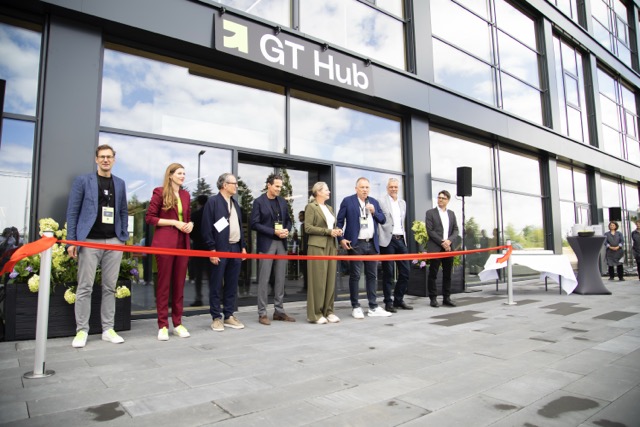
Yes. climatechfacade has been implemented in the GT Hub reference project in Memmingen, where 86 active facade modules operate with intelligent room conditioning. The project demonstrates climatechfacade as a real building system, not only a prototype. It also shows how facade-integrated heating, cooling, shading, and sensor-based control can work together in practice.
For the tech-savvy
Learn more about the hywin system and its products and talk to us. For the deep dive into all the how’s.
``Perimeter comfort became predictable.``
- Dr. Stefan Lenz, Co-CEO GreenTech Hub GmbH
GT Hub Memmingen
climatechfacade live
It showcases hywin’s façade-integrated technology, utilizing 86 intelligent modules
to deliver high-performance comfort through real-world operational logic.